Pantry guide 04 · Dates
A guide to date varieties, from Medjool to Barhi
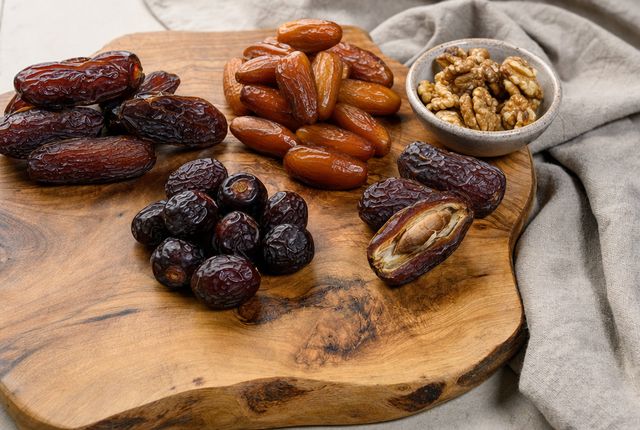
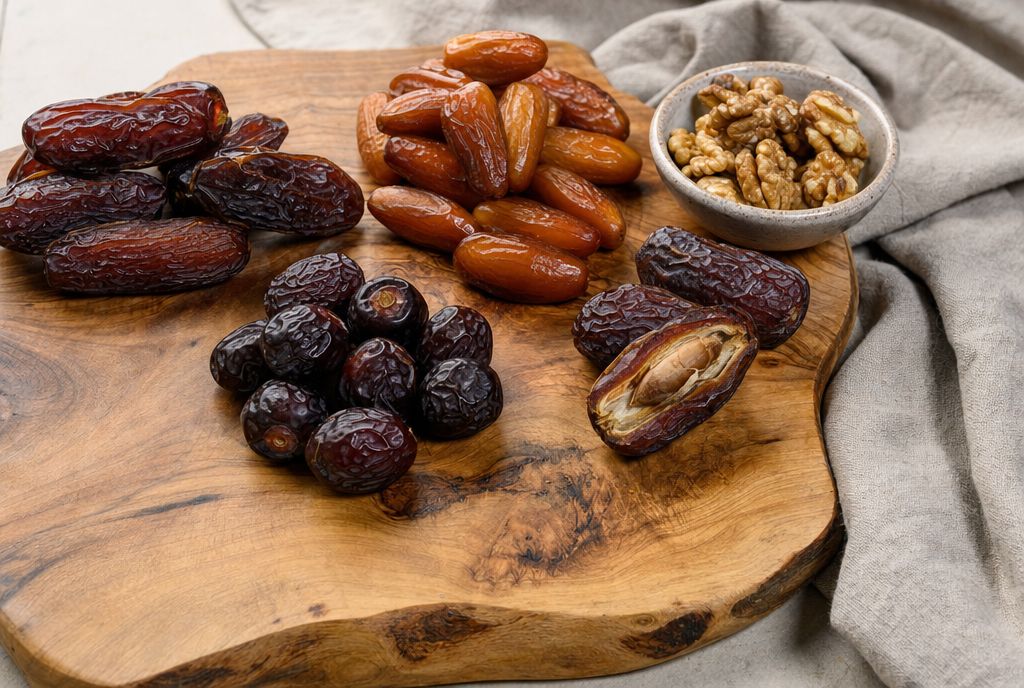
Dates vary as much as apples do. Some are sticky and caramel-soft, some firm enough to slice, and a few are best eaten crunchy and yellow before they ever dry. Picking the right one starts with knowing what you are cooking.
Illustrative photograph
Find the right date for the job
Start with what you plan to do with them. Choose a use to see which varieties suit it and why.
Medjool, Sukkari, Halawi, Ajwa
Soft, rich dates are the treat on their own. Sukkari and Halawi are among the sweetest; Ajwa is less sugary with a dense, prune-like chew; Medjool is the big, caramel-sweet crowd pleaser.
Medjool, large Deglet Noor
Size matters for stuffing. Medjools split cleanly and hold almonds, walnuts, cheese or tahini. Large Deglet Noor work for a firmer, two-bite version.
Deglet Noor, Zahidi
Firmer, drier varieties chop without turning to paste and keep their shape in breads, cakes and granola. They are also less sticky on the knife.
Medjool, Khadrawy, any soft date
For blending, softness beats variety. Soak firmer dates in hot water for ten minutes first. Date syrup (dibs or silan) is the concentrated cousin for drizzling.
Medjool, Barhi in season, Deglet Noor
Medjools pair with blue cheese and aged cheddar. Fresh yellow Barhi in late summer bring crunch and a surprise for guests. Deglet Noor sit nicely with salty feta and olives.
Eight varieties, side by side
These are among the varieties most often found in specialty shops in North America and Europe. Texture describes dates at the fully ripe, dried stage unless noted.
| Variety | Texture | Flavor | Best for |
|---|---|---|---|
| Medjool | Very large, soft, moist | Caramel, toffee | Eating, stuffing, paste |
| Deglet Noor | Medium, semi-dry, firm | Delicate, honey-like | Baking, chopping, salads |
| Barhi | Round; crunchy when yellow, very soft when ripe | Fresh and mild, then butterscotch | Eating fresh in season |
| Halawi | Soft, small to medium | Very sweet, honey and caramel | Eating, desserts |
| Khadrawy | Soft, dark | Rich, less sugary | Eating, blending |
| Zahidi | Medium, semi-dry, golden | Nutty, mildly sweet | Cooking, baking, snacking |
| Sukkari | Very soft, golden | Intensely sweet | Eating with coffee |
| Ajwa | Small, dark, dense | Prune-like, fruity, less sweet | Eating, gifting |
Medjool is often treated as the default “good date” in North America, partly because of its size. Next to a Halawi or Sukkari it can taste less sweet, and next to a firm Zahidi it is far stickier. Buying two or three varieties at once is the fastest way to learn your own preference.
Ripening stages: why some dates are yellow and crunchy
Date growers describe ripening in stages, using Arabic names that turn up on labels and in shops that specialize in dates.
- Kimri. Green, hard and growing. Not eaten.
- Khalal (also called bisr). Full size and colored yellow or red, still crunchy. This is how fresh Barhi is sold, usually still on the strand.
- Rutab. Partly ripe: the tip turns soft, brown and translucent while the top stays firm. Many people consider this the best stage of all.
- Tamar. Fully ripe and partly dried on the palm. This is the stage of almost all boxed dates and the one that keeps for months.
The fresh dates that tasted chalky
Khalal-stage dates can leave a dry, puckering feeling in the mouth, from tannins that fade as the fruit ripens. People taste one, decide they dislike fresh dates, and throw the rest away. Leave the strand at room temperature for a day or two instead: as the dates move toward rutab, the astringency drops away and the flavor turns to butterscotch. Refrigerate once they reach the ripeness you like.
Buying and storing dates
Good dates look plump and glossy with skin that is wrinkled but not hard. A little stickiness is normal. Avoid boxes with fermented or sour smells, a lot of loose crystallized sugar, or signs of insects at the stem end.
- If you will eat them within a few weeksAn airtight container at cool room temperature is fine
- If you bought a large boxKeep a week’s worth out and refrigerate the rest
- If they are soft Medjool or fresh BarhiRefrigerate; they lose shape and ferment faster in warmth
- If you want to keep them for monthsFreeze them; they barely firm up and thaw in minutes
- If they have dried outSoak in warm water for ten minutes, or use them for paste and baking
The short version
- Soft varieties for eating and stuffing; firm varieties for chopping and baking.
- Fresh yellow Barhi are a seasonal treat that needs a day or two on the counter.
- Cold storage keeps dates soft for months, and white sugar spots are normal.
Dates are one of the easiest foods to give because they travel well. The food gift box guide covers how to pack them with oil, spices and nuts, and the spice guide explains advieh and ras el hanout, both of which pair well with dates in sweet and savory cooking.
Date questions
No question matches that word. Try a shorter one.
Are the white spots on my dates mold?
Usually not. Dates often develop small white or tan crystals on the skin as their natural sugars migrate outward, which is called sugaring. It is harmless and can be softened with a few seconds of gentle warming. Fuzzy growth, a sour or fermented smell or a wet surface are different stories; discard those.
Do dates need to be refrigerated?
Fully ripe dried dates keep at cool room temperature in an airtight container for a few weeks. The refrigerator extends that to months, and the freezer keeps them longer still. Soft varieties like Medjool and fresh-stage Barhi stay in better shape in the fridge.
What are fresh yellow dates?
Those are dates sold at the khalal stage, full-sized and colored but still firm. Barhi is the variety most often sold this way, usually on the branch in late summer and early autumn. They are crunchy and mildly sweet, sometimes slightly astringent, and they soften into the rich rutab stage over a few days at room temperature.
Can I substitute one date variety for another in baking?
Mostly, yes, with adjustments. Soft dates like Medjool add more moisture and can make a batter wetter, while firmer Deglet Noor or Zahidi chop cleanly and hold their pieces. If a recipe was written for chopped dates, a firmer variety gives the expected result.
Are pitted dates always free of pits?
Not always. Mechanical pitting misses the occasional pit or leaves fragments. Check by feel when serving dates to children or anyone who might bite down hard, and run a finger through chopped dates before they go into a blender.