Pantry guide 02 · Spices & blends
Buying and storing spices that still taste like spices
Most spice disappointment has nothing to do with the recipe. It comes from a jar that has been open since the last move. This is how to buy, keep and use spices so they pull their weight.
Illustrative photograph
Whole or ground: the decision that matters most
Aroma lives in volatile oils, and those oils escape from exposed surfaces. A cumin seed keeps most of its oil sealed inside its husk. Grind it and you multiply the surface area many times over, so the clock starts running fast.
That does not mean every spice should be bought whole. Some are hard to grind finely at home (cinnamon bark, dried ginger, turmeric root), and some are mostly sold ground for good reason (paprika, sumac). The practical answer is to buy whole for the seeds you use often and ground for the rest, in small quantities.
| Whole | Ground | |
|---|---|---|
| Flavor life | Long; seeds and barks often stay lively for a couple of years | Short; noticeably weaker within months of opening |
| Prep | Needs toasting or grinding for most uses | Ready to use |
| Flavor control | Toast lightly or deeply, grind coarse or fine | Fixed by the producer |
| Easy at home | Cumin, coriander, fennel, pepper, cardamom, nigella | Turmeric, ginger, paprika, cinnamon, sumac |
How long spices really last
Spices do not spoil in the way milk does. They fade. Rough guidelines that most cooks work from: ground spices are at their best for about six months to a year after opening, dried leafy herbs for a similar span, and whole seeds, pods and barks for a couple of years or more. Those numbers shrink fast in a warm, bright kitchen.
The pantry freshness check on the home page lets you slide through the months for each type and see where your jar probably sits.
Shaking a jar directly over a steaming pot. Steam rises into the jar, the spice clumps, and moisture speeds up the loss of aroma. Measure into your hand or a spoon away from the pan.
Storage that works
- Airtight containers, glass or tin, with tight lids.
- A drawer or cupboard away from the stove, oven and dishwasher vent.
- Labels with the month you opened the jar, written on the lid.
- Small amounts. If a blend comes in a big bag, decant a few weeks’ worth and seal the rest.
Blend explorer: what is in the jar
Regional blends are where spice buying gets confusing, because the same name can mean quite different mixes. Pick a blend to see a typical makeup, how it is used, and what to check before you buy. Treat the ingredient lists as common versions, not fixed recipes.
Za’atar Levant
- Dried thyme, oregano or wild za’atar herb
- Sumac
- Toasted sesame seeds
- Salt
How it is used. Mixed with olive oil and baked on flatbread as manaqish, stirred into labneh, scattered over eggs, roast vegetables and salads.
Before you buy. The herb portion should still smell green. Gray, dusty za’atar with pale sesame is past its best.
Baharat Middle East, widely
- Black pepper
- Allspice
- Cinnamon
- Cloves
- Cumin
- Coriander
- Cardamom
- Nutmeg
How it is used. Rubbed on lamb and chicken, stirred into rice with meat, ground meat for kibbeh and kofta, tomato stews.
Before you buy. The name simply means “spices.” Turkish, Gulf and Levantine versions differ, some with paprika or dried lime.
Ras el hanout Morocco and North Africa
- Cumin
- Coriander
- Cinnamon
- Ginger
- Turmeric
- Black pepper
- Cardamom
- Dried rose petals
How it is used. Tagines, couscous, roast squash, lamb shoulder, a pinch in honey-glazed carrots.
Before you buy. Roughly “head of the shop,” a merchant’s best mix. Ingredient lists run from a handful to several dozen.
Dukkah Egypt
- Toasted hazelnuts or other nuts
- Sesame seeds
- Coriander seed
- Cumin seed
- Black pepper
- Salt
How it is used. Bread dipped in olive oil then dukkah, a crust for fish, a crunchy topping for soups and yogurt.
Before you buy. Coarse and nutty, so it goes stale faster than seed-only blends. Buy small or toast your own.
Advieh Iran
- Dried rose petals
- Cardamom
- Cinnamon
- Cumin
- Coriander
- Nutmeg
How it is used. Rice dishes and polow, khoresh stews, a sweeter version for desserts and pastries.
Before you buy. Rose-forward and gentle. Cooks often keep one mix for rice and another for stews.
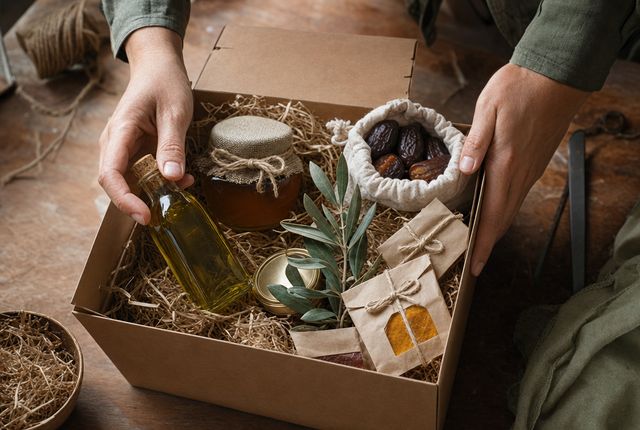
Several of these blends contain sesame or nuts. Sesame is one of the major food allergens named in US labeling law, so check the ingredient list when cooking for guests, and mark it on the card if you put a blend in a food gift box.
Five single spices worth knowing well
Sumac
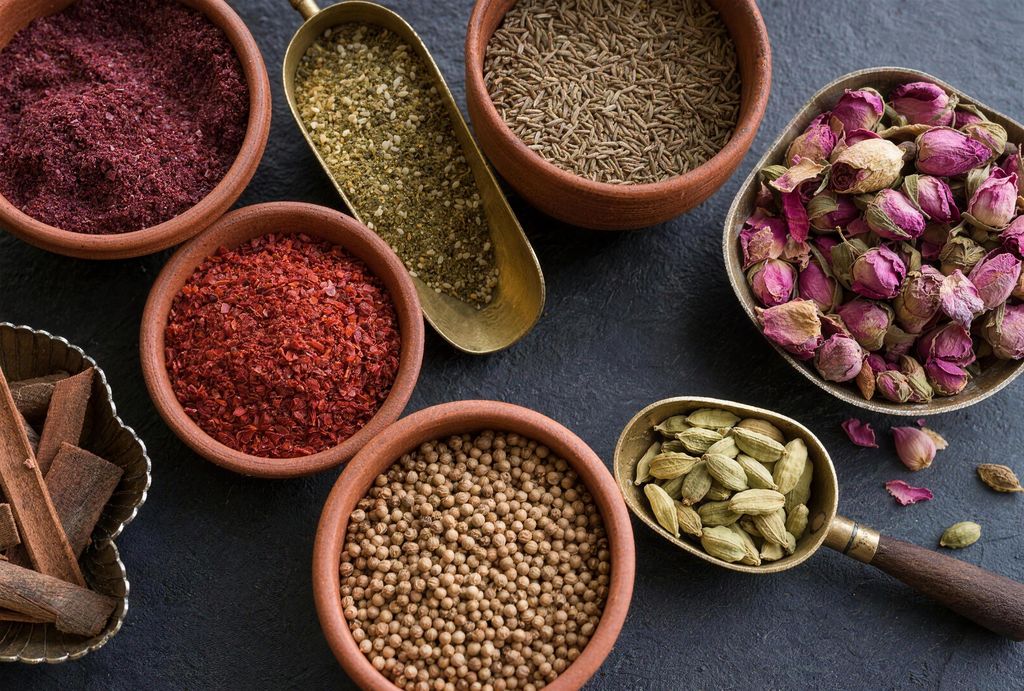
Ground dried berries of the sumac shrub, deep red and sharply tart. It brings a lemony sourness without liquid, which is why it shows up on grilled meat, onions, fattoush and za’atar. Good sumac is moist-looking and vivid; dull brown sumac has lost its edge. Some producers add salt, so check the label.
Aleppo-style pepper
Coarse, slightly oily chili flakes with moderate heat, fruitiness and a faint saltiness. Much of what is sold today is grown in southern Turkey, not Syria, and is often labeled as Aleppo-style or Halaby pepper. Its close relatives Urfa (dark, smoky, raisin-like) and Maraş peppers are worth trying side by side.
Cumin
The backbone of countless dishes from Morocco to India. Whole seeds toasted for a minute in a dry pan smell entirely different from pre-ground powder. If you buy only one whole spice, make it this one.
Cardamom
Green cardamom is floral and sweet, used in coffee, rice and pastries. Black cardamom is a different plant’s pod, dried over fire, and tastes smoky and camphor-like. Buy green pods whole; ground cardamom fades very quickly.
Saffron
The dried stigmas of a crocus, picked by hand, which explains the price and the fraud. Real threads are trumpet-shaped at one end and release a golden color slowly when soaked in warm water. Threads that bleed red dye immediately, or that look uniform and stringy, deserve suspicion.
The bulk bag bargain
A one-pound bag of ground cumin costs less per ounce than a small jar, and it looks like a smart buy. Most home kitchens use a few tablespoons a month. By the time the bag is half empty it has gone flat, and the recipes calling for it have gone flat too. The cheaper long-term move is a small bag of whole seeds and a grinder.
Toast whole, bloom ground
Two techniques get far more from the same jar.
- Dry toasting whole spices. Heat a dry pan over medium, add seeds, shake often, and stop when they darken a shade and smell strong, usually one to three minutes. Tip them onto a plate right away so the pan’s heat does not scorch them. Grind once cool.
- Blooming in fat. Warm oil, butter or ghee, add spices, and stir for 20 to 60 seconds before adding wet ingredients. Many aroma compounds dissolve in fat, so the flavor carries through the whole dish. This is the idea behind tadka in Indian cooking and the spiced butter poured over many Middle Eastern dishes.
- If the spice is a whole seed going into a rub or blendDry toast, cool, then grind
- If it is ground and going into a stew or braiseBloom it in the oil before the liquid goes in
- If it is a finishing spice like sumac or za’atarAdd at the end, raw, so the bright notes survive
- If it is paprika or Aleppo pepperBloom gently and briefly; both scorch and turn bitter fast
Spices and pulses belong together. For how long to cook the lentils and chickpeas those spices are going into, see the grains and legumes guide, and for the oil to bloom them in, the olive oil guide.
Spice questions
No question matches that word. Try a shorter one.
How can I tell if a spice is still good?
Rub a pinch between your fingers and smell it. A fresh spice smells clearly of itself within a second or two. Faded color and a dusty, faint smell mean the aromatic oils have mostly gone. Old spices are rarely unsafe, they just stop doing their job.
Is it worth grinding my own spices?
For the spices you use most, yes. Cumin, coriander, black pepper, cardamom and fennel change noticeably when freshly ground. A small blade grinder kept only for spices or a mortar and pestle handles most of them in under a minute.
Why does za’atar taste different from one jar to the next?
Za’atar is both a herb and a blend, and recipes vary by country, region and family. Some lean on thyme, some on oregano or the za’atar herb itself, and the ratio of sumac, sesame and salt changes the whole character. Taste a little before buying a large bag.
Should spices be kept in the refrigerator?
Not usually. Opening a cold jar in a warm kitchen draws in moisture, which causes clumping and speeds decline. A cool, dark drawer is better. The exception is bulk spices you will not open for months; those keep well sealed in the freezer.
What is the difference between Aleppo pepper and paprika?
Aleppo-style pepper is a coarse, slightly oily flake with moderate heat and a fruity, raisin-like flavor. Paprika is a finer powder ranging from sweet to hot or smoked. They can stand in for each other in a pinch, but Aleppo brings more texture and a gentle salty-sour edge.