Pantry guide 03 · Grains & legumes
Cooking grains and dried legumes without guesswork
Bulgur, freekeh, lentils and chickpeas are cheap, filling and forgiving once you know two things: how much water each one wants, and how old the bag is.
Illustrative photograph
Water and time calculator
Pick a grain or legume and how much dry you are cooking. The numbers below are starting points; heat, pot width and lid fit all shift them, so taste before you drain.
- Liquid
- Time
- Yield
Know your grains before you buy them
Bulgur
Wheat that has been cooked, dried and cracked. Because it is precooked, fine bulgur needs only a soak, which is why it works so well in tabbouleh and kibbeh. Coarse bulgur gets simmered like rice for pilafs and stuffed vegetables. Shops and recipes often use numbers for the grind, from #1 (finest) up to #3 or #4 (coarse), though the scale is not universal.
Freekeh
Durum wheat harvested young and green, then roasted so the straw and chaff burn away while the moist kernels survive. The result tastes smoky and grassy. Cracked freekeh cooks in about twenty minutes; whole freekeh takes closer to three quarters of an hour. Rinse it and pick out stray chaff.
Farro
An Italian name that can refer to emmer, spelt or einkorn, though emmer is the most common in shops. The label to watch is the processing: whole farro keeps all its bran and takes longest, semi-pearled has some bran scratched off, and pearled cooks fastest with the least chew.
Couscous
Not a grain at all but tiny pellets of semolina pasta. The boxed instant type is pre-steamed and only needs boiling water. Larger pearl couscous (sometimes sold as Israeli couscous or ptitim) is toasted pasta that is simmered like orzo.
Toast grains before adding water. A few minutes in a little oil or butter, stirring until they smell nutty, gives bulgur, freekeh and rice a deeper flavor and helps the grains cook up separate.
Lentils by color: which ones hold their shape
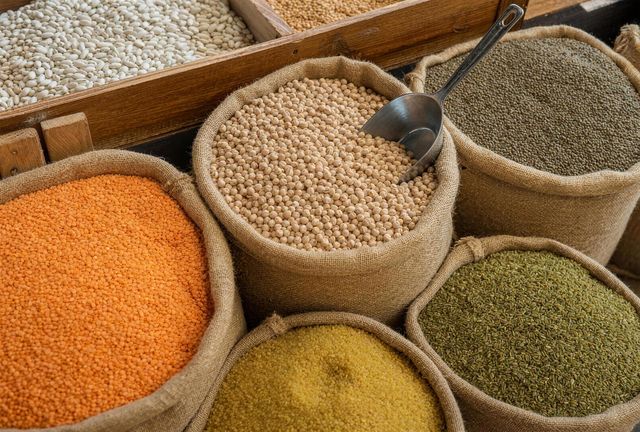
Lentils need no soaking, which makes them the fastest route from dry pantry to dinner. The color on the bag is the best clue to how they will behave in the pot.
| Type | Texture when cooked | Typical time | Good for |
|---|---|---|---|
| Red or yellow (split) | Collapses into a puree | 15 to 20 min | Soups, dal, mercimek çorbası |
| Brown | Soft, can turn mushy | 20 to 30 min | Mujaddara, stews, spreads |
| Green | Mostly holds shape | 25 to 35 min | Warm salads, soups with texture |
| French green (Puy type) | Firm, keeps shape well | 20 to 30 min | Salads, sides |
| Black (beluga) | Firm, glossy | 20 to 25 min | Salads, grain bowls |
Keep the simmer gentle. A hard boil bursts skins and turns even firm lentils into porridge, which is fine for soup and disappointing in a salad.
Chickpeas and beans: why some never soften
Dried chickpeas cooked at home taste noticeably better than canned and cost less, but they have a reputation for being unpredictable. Most of that comes down to three things you can control.
- Soak them. Eight to twelve hours in plenty of cold water, or the quick-soak method: boil two minutes, then rest covered for an hour. Salt in the soak water seasons them and tends to soften the skins.
- Mind the water. Hard tap water slows softening. A small pinch of baking soda in the cooking water raises the pH and helps break down the skins, which is why many hummus recipes call for it. Too much tastes soapy.
- Hold the acid. Tomato, lemon and vinegar firm up legume skins. Add them once the chickpeas are already tender.
The two-hour chickpeas that were still chalky
Beans and chickpeas stored for a long time in warm, humid conditions can develop what food scientists call the hard-to-cook defect: their cell walls stiffen and stop absorbing water properly. No amount of extra simmering fully fixes it. There is no reliable way to spot it in the bag, which is why buying from a shelf with steady turnover, and using pulses within a year or so, matters more than any recipe trick.
- If you want silky hummusOvercook the chickpeas slightly with a pinch of baking soda, then blend warm
- If they are going into a saladCook until just creamy inside and let them cool in their liquid
- If you forgot to soakQuick soak, or use a pressure cooker
- If they are still hard after two hoursSuspect old stock; blend them into soup and buy a fresher bag
Save the cooking liquid. Chickpea water, often called aquafaba, whips into a foam that stands in for egg whites in some recipes, and it thickens soups.
Buying and storing the dry pantry
Look for uniform color and size, few broken pieces, and no dust at the bottom of the bag. Shriveled, cracked or faded legumes are usually old. For grains, smell matters: wheat berries, brown rice and other whole grains carry oil in the germ, and that oil can turn stale and bitter.
- Airtight jars or tubs in a cool cupboard keep moisture and pantry moths out.
- Whole grains and whole-grain flours last much longer in the freezer.
- Do not mix old and new batches of the same bean in one jar; they cook at different speeds.
- Write the purchase month on the lid.
The short version
- Lentils and bulgur are fast and need no soak.
- Chickpeas need a soak, soft water or a pinch of baking soda, and acid added late.
- Age is the hidden variable. Buy from a shelf that sells through, and use pulses within about a year.
Grains and pulses lean on good fat and spice. The spice guide covers blooming cumin and baharat in oil, and the olive oil guide helps you pick the oil to finish a bowl of hummus.
Grain and legume questions
No question matches that word. Try a shorter one.
Does salting beans while cooking make them tough?
No, that is a long-running kitchen myth. Salt in the soaking or cooking water seasons the beans and tends to give softer skins. Acid is the real culprit: tomatoes, lemon juice or vinegar added early slow softening, so add them once the beans are nearly tender.
Why are my chickpeas still hard after hours of cooking?
Usually age or water. Old chickpeas, especially ones stored somewhere warm and humid, can resist softening no matter how long they cook. Hard tap water high in calcium and magnesium slows things down too. A small pinch of baking soda in the cooking water helps, and fresher stock from a busy shelf helps most.
Do I need to rinse bulgur or lentils?
Give lentils a rinse and a quick look for small stones or debris, which turn up in any field-harvested crop. Bulgur can simply be soaked or cooked without rinsing. Smoked freekeh benefits from a rinse and a pick through for bits of chaff.
What is the difference between bulgur and cracked wheat?
Bulgur is wheat that has been cooked (usually parboiled), dried and then cracked, which is why fine bulgur only needs soaking. Plain cracked wheat has not been precooked and needs much longer simmering.
Can I cook dried chickpeas without soaking?
Yes, but expect a much longer cook and less even texture. A quick soak is a good compromise: cover with water, boil for two minutes, turn off the heat and leave covered for an hour, then drain and cook as usual. A pressure cooker shortens the whole process considerably.